
Building Loadar’s online marketplace MVP for the freight transport industry.
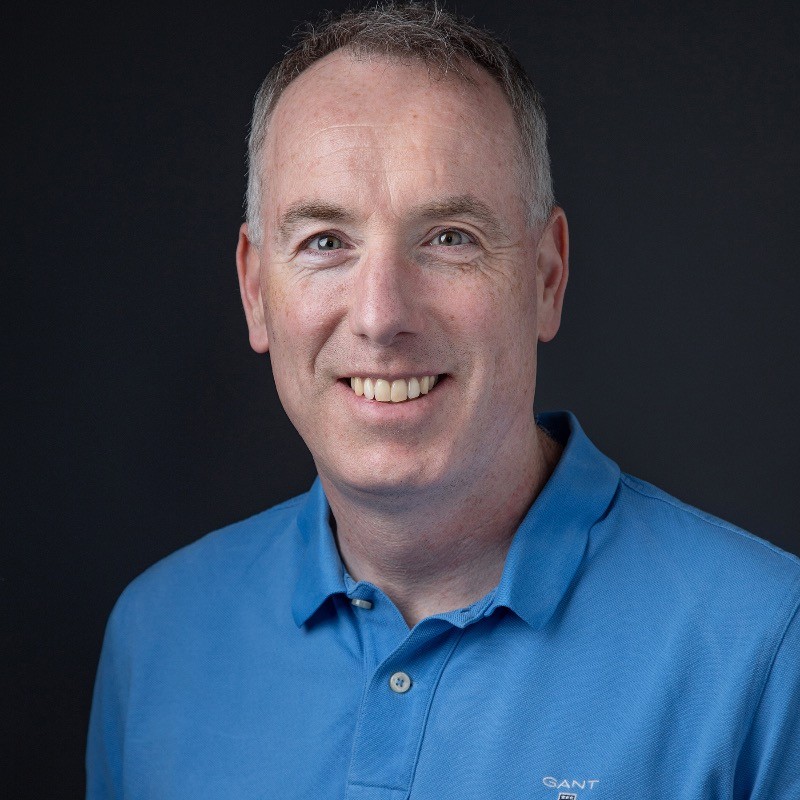
Ciaran Doherty spent a career in the freight transportation industry and saw the need for a marketplace that connects shippers with carriers. He recognized an opportunity to build a platform that could matchmake between the two.
The trouble was this: he needed a software product to go to market, but he didn’t have the tech-specific experience to build it himself.
I helped Ciaran build the product blueprint for his online marketplace, and then I managed the team of developers to build it.
The result was Loadar—a beautiful app that exceeded Ciaran’s expectations. Here’s exactly how I helped Ciaran build the product he needed.
Background
Ciaran had been in the freight transportation industry for more than 20 years. He noticed that, on the one hand, many shippers have trouble finding reliable carriers to move their pallets of goods. On the other hand, carriers’ trucks run with an average fill rate of only 63%—very inefficient for a multibillion-dollar industry.
Ciaran saw a massive opportunity.
He knew that if he could better connect shippers and carriers, he could solve an important problem for both. His goal was to create a marketplace for freight logistics that could improve fill rates and efficiencies for carriers, get shippers a better price on their transportation costs, reduce the carbon footprint of the industry, and bring more insight into the status of in-transit goods.
“I wanted to create a really good user interface for a platform to connect shippers to carriers in the freight transport industry. I needed something that worked well and could solve that problem.”
— Ciaran Doherty, Founder and CEO, Loadar
Problem: Ciaran lacked the software experience he needed to build a bullet-proof platform
Ciaran’s problem was that he needed to build software, but didn’t have a background in tech. He needed to build a robust Minimum Viable Product (MVP) on a fixed R&D budget. And once he had the MVP, he needed to develop the technical capacity of his fledgling startup to maintain the product.
Need 1: A working MVP
Ciaran started with a pretty clear idea of what he needed his product to be able to do. The trouble was that he didn’t have the expertise to manage a software development project and hire good developers. He needed someone to help him turn his business idea into a set of features and find a team that could build it.
“Kareem makes it very easy for a non-tech founder to have real-life business conversations and convert them into technical specifications. At no point was I intimidated in the conversations.”
— Ciaran Doherty, Founder and CEO, Loadar
Need 2: A fixed R&D budget
Ciaran had a fixed budget for the project. On the one hand, he wanted some flexibility to be able to add new features to the blueprint if it turned out they were useful. On the other hand, he needed to be confident that changes to the product wouldn’t put him over budget.
Need 3: A technical team for product sustainability
Finally, Ciaran needed a technical lead who understood the product and could oversee its maintenance after the MVP was launched to the market.
Why Ciaran chose Kareem to build Loadar
Ciaran found me through the recommendation of his investor, but he was also considering other software development agencies. Here’s why he ultimately chose to work with me.
He wanted an experienced team of senior developers
Software agencies make money by charging senior developer rates but pay junior developers to actually build the product. There’s no substitute for experience—most juniors at an agency simply don’t have the technical strength to build the solid foundation a product needs to be able to scale.
I offered Ciaran my 20+ years of software development experience to manage a team of freelance senior developers that I vetted and managed. I’ve shipped over a dozen MVPs since starting my first software company in 2007, including a marketplace similar to the one Ciaran wanted to build (I grew it to $130 million in volume).
The devs I chose were experienced and effective. I made sure that our interests aligned—I was managing the devs for a fixed price, so if they weren’t good, it was my headache.
He wanted a fixed price
Agencies rarely commit to a fixed price bid because a fixed price comes with estimation risk. Instead, they bill in weekly increments for the length of the project—the longer the project, the more you pay.
The downside of this approach is that if the project is not well managed your scope can increase significantly, and you may pay a lot more than you anticipated. Or, you may spend your entire budget but get a product that doesn’t do what you want it to.
The approach I take is that my clients don’t pay a penny more than the fee we agree to for the product we agree to build. I take on the estimation risk, and I manage it by drawing on my experience and conducting an extensive blueprinting exercise to flesh out the details before we start building.
He wanted some flexibility in the project scope
Ciaran knew that he was going to need a bit of wiggle room with his scope. The agencies he was considering couldn’t provide that.
“I quickly realized that this was going to be a much more interactive and dynamic relationship than what the other company wanted. They wanted to tie me down to the letter what the scope was going to be—it was a lot more rigid and contractual.”
— Ciaran Doherty, Founder and CEO, Loadar
Instead, I offered a system to allow for some scope changes while still maintaining a fixed price for the project. We created a special budget of 10% of the total price dedicated to scope changes and additions that weren’t in the blueprint. It was a “use it or keep it” budget—if Ciaran didn’t want any new features, he would keep the budget. If he did want new features, we would draw down the 10% to build them.
Solution: Blueprinting, an MVP, and a technical team
I ultimately provided Ciaran with three solutions. First, I helped him plan the product blueprint — an 80 page document for the web, iOS, and Android apps he needed to build. This enabled me to provide him with a fixed price to build his MVP.
Then, once he chose me to actually build the MVP, I put together a team of developers to build the first version of the MVP.
Finally, I found him a technical lead to join the team and guide the development of the product into the future.
1. I led a fixed-scope and fixed-cost blueprinting session
During the blueprinting session, I worked with Ciaran to understand the business needs and translate them into specific features with a set of requirements. This blueprint served as the shared understanding of what a successful build looked like.
In my experience this is the single most important step for project success. Agencies may design some screens up front, but the devil’s in the details. With my approach, the blueprint lays out all the key flows and screens in the app along with what happens on each screen. Agencies rarely take the time to flesh this out in advance because they charge you every week or month—the longer the project, the better for them.
By the end of this session, Ciaran knew what he needed to build and what “done” would look like. I also provided a fixed cost and estimated timeline for me to build what we laid out in the blueprint.
2. I built version one of the Loadar MVP
After seeing the roadmap, Ciaran hired me to build it. My role became a CTO / CPO (Chief Product Officer), and I found two full-time senior freelance developers to code the MVP. I set up the team’s process and tooling, and I managed them to deliver a quality and scalable product with the features that we specced in the blueprint. I met with Ciaran weekly—sometimes more often—throughout the process to keep him up to speed, show him new features, and get feedback to tweak these so they’d be market-ready.
I estimated it would take six months to build the MVP, and we launched in six months and 3 days.
3. I set Ciaran up with a technical team and development process
When an agency finishes a product, they toss it to you over the fence and move on to the next. That’s fine for some, but it wasn’t ideal for Ciaran who didn’t yet have a development team.
Instead, I connected him with the lead freelance developer that I had hired so that he could have the option to hire them to continue working on the project. The dev ended up coming on board and is now working closely with Ciaran and leading Loadar’s technical development.
I also set Ciaran and the team up with a robust development process and tooling he needed to keep the project humming along.
Results: “I have a better product than I could have hoped for”
Ultimately, Ciaran was happy with Loadar, the online marketplace for freight logistics that we built for him.
Ciaran loved the MVP
Ciaran was very pleased with the result. In his words,
“I couldn’t be more complimentary about the end product—I have a better product than I could have hoped for. To see this all come together on budget, on time, and end up with a product that doesn’t look like an MVP… I’m out there in the market with a product that I’m proud of and I’m getting massive compliments about it.”
— Ciaran Doherty, Founder and CEO, Loadar
He appreciated flexibility on the scope
Building the MVP was a big investment and it was critical to get right. He needed to feel comfortable that he could shift tack as we went without any nasty cost surprises.
“I was a little nervous about the scope issues, but I found Kareem very flexible and reasonable. Kareem is very trustworthy and strong on principles. He is fair and reasonable in terms of scope creep—there’ll be no surprises at the end.”
— Ciaran Doherty, Founder and CEO, Loadar
He was grateful to have a partner think through the details
Product ideas need to be validated by trusted team members. Ciaran and I worked together to develop the very best version of Loadar.
“Kareem was a really good sounding board for me all the way through this. He really felt like part of the team. His industry experience, his real-life experience, and his sharpness helped me build a much better product out of me than I was capable of spec-ing myself.”
— Ciaran Doherty, Founder and CEO, Loadar
He found a senior technology lead to manage the product going forward
Last, I made sure that I left Ciaran in good hands. I helped him find a person I trusted to hire and lead developers as their startup grows.
“Kareem managed to onboard me a tech lead. He put me in a really good spot going forward.”
— Ciaran Doherty, Founder and CEO, Loadar
When asked if he would recommend working together, Ciaran was emphatic:
“I would 100% recommend Kareem to work with another founder or CEO, especially a non-technical one (although I’d also recommend Kareem for a technical one, too). He helped guide me through the technical aspects, made it easy, and provided a great product. It was a really pleasant working experience. I honestly hope we have the opportunity to work together again.”
— Ciaran Doherty, Founder and CEO, Loadar
Within 18 months after launch, Ciaran and Loadar successfully raised a $4M round to fuel US expansion.
Thinking about building?
Get in touch